


- Bullitt County
- Hardin County
- Nelson County
- LaRue County
- Marion County
- Taylor County
- Casey County
- Lincoln County
- Shepherdsville
- Elizabethtown
- Bardstown
- Hodgenville
- Lebanon
- Campbellsville
- Liberty
- Stanford
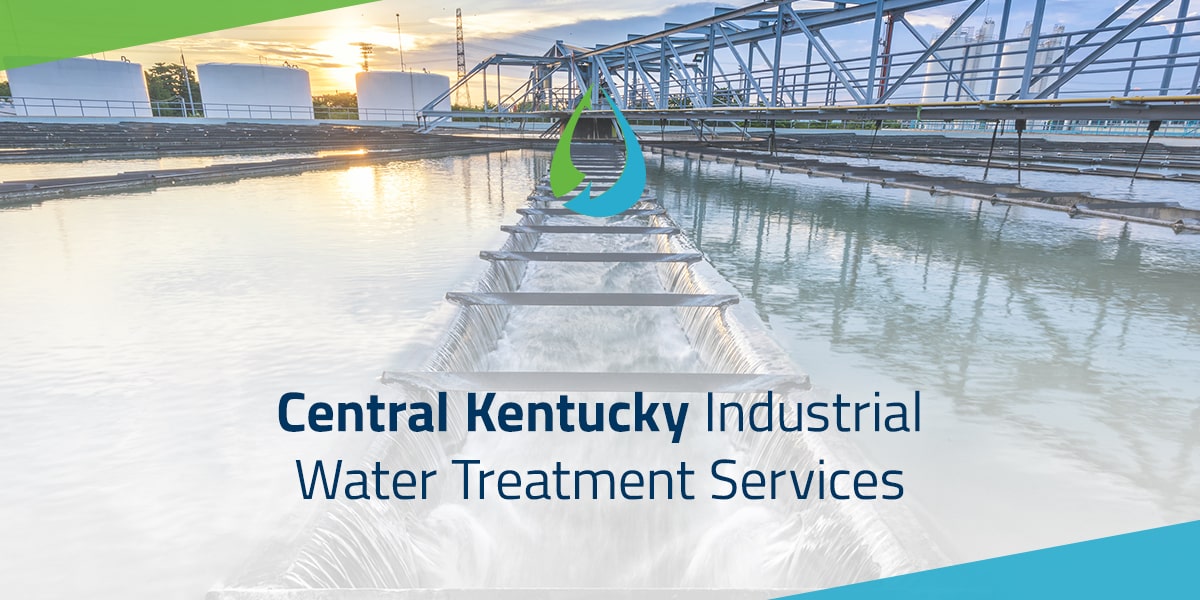
Central Kentucky’s signature industries depend on water systems that perform flawlessly under demanding conditions. Bourbon distilleries throughout the Bluegrass Region require steam boilers that operate continuously without interruption. Georgetown’s manufacturing complex and automotive suppliers across Fayette County cannot afford production delays caused by cooling system failures. University campuses and regional health care facilities face strict compliance requirements for Legionella control.
Chardon Laboratories addresses region-specific water quality issues with strategic solutions designed for local businesses.
Learn more about our services in the central Kentucky area below.
Central Kentucky Service Areas
Our technicians serve commercial and industrial facilities throughout the Bluegrass Region’s major population and manufacturing centers.
- Ballard County
- Caldwell County
- Calloway County
- Carlisle County
- Christian County
- Crittenden County
- Fulton County
- Graves County
- Hickman County
- Hopkins County
- Livingston County
- Lyon County
- Marshall County
- McCracken County
- Muhlenberg County
- Trigg County
- Todd County
- Webster County
- Wicklilffe
- Princeton
- Murray
- Bardwell
- Hopkinsville
- Marion
- Hickman
- Mayfield
- Clinton
- Madonsville
- Smithland
- Eddyville
- Benton
- Paducah
- Greenville
- Cadiz
- Elkton
- Dixon
- Butler County
- Daviess County
- Hancock County
- Henderson County
- Hopkins County
- McLean County
- Muhlenberg County
- Ohio County
- Union County
- Webster County
- Breckinridge County
- Christian County
- Edmonson County
- Grayson County
- Hart County
- Logan County
- Todd County
- Warren County
- Morgantown
- Owensboro
- Hawesville
- Henderson
- Madisonville
- Livermore
- Greenville
- Hartford
- Morganfield
- Dixon
- Hardinsburg
- Hopkinsville
- Brownsville
- Leitchfield
- Munfordville
- Russellville
- Elkton
- Bowling Green
- Anderson County
- Bourbon County
- Boyle County
- Clark County
- Fayette County
- Franklin County
- Garrard County
- Harrison County
- Jessamine County
- Madison County
- Mercer County
- Nicholas County
- Scott County
- Woodford County
- Lawrenceburg
- Paris
- Danville
- Winchester
- Lexington
- Frankfort
- Lancaster
- Cynthiana
- Nicholasville
- Richmond/Berea
- Harrodsburg
- Carlisle
- Georgetown
- Versialles/Midway
- Bell County
- Boyd County
- Breathitt County
- Carter County
- Clay County
- Elliott County
- Floyd County
- Greenup County
- Harlan County
- Jackson County
- Johnson County
- Knott County
- Knox County
- Laurel County
- Lawrence County
- Lee County
- Leslie County
- Letcher County
- Magoffin County
- Martin County
- McCreary County
- Morgan County
- Owsley County
- Perry County
- Pike County
- Whitley County
- Wolfe County
- Pineville
- Catlettsburg
- Jackson
- Grayson
- Manchester
- Sandy Hook
- Prestonburg
- Greenup
- Harlan
- McKee
- Paintsville
- Hindman
- Barbourville
- London
- Louisa
- Beattyville
- Hyden
- Whitesburg
- Salyersville
- Inez
- Whitley City
- West Liberty
- Booneville
- Hazard
- Pikeville
- Williamsburg
- Campton
We Offer a Wide Variety of Water Treatment Services
Contact Us

This site is protected by reCAPTCHA and the Google Privacy Policy and Terms of Service apply.
Understanding the Bluegrass Region’s Hard Water Challenge
Water sourced from Central Kentucky’s limestone aquifers carries elevated concentrations of dissolved calcium and magnesium. While this mineral content contributes to the distinctive character prized by bourbon distillers, it poses significant operational challenges for facility equipment. When hard water circulates through boilers, cooling towers and closed loop systems without proper treatment, minerals precipitate onto metal surfaces as scale.
Scale formation affects distillery operations, automotive manufacturing facilities and university campus buildings in numerous measurable ways:
- Energy waste: Mineral deposits on boiler tubes and heat exchanger surfaces act as insulators, requiring higher fuel input to maintain temperature targets.
- Equipment degradation: Scale creates hot spots that warp metal components and shorten equipment lifespans.
- Production risk: Unplanned system failures disrupt manufacturing schedules in environments where downtime carries significant financial consequences.
Corrosion compounds these problems. Dissolved oxygen and carbonic acid can attack system metallurgy, creating leak paths and component failures that threaten operational continuity.
Water Treatment Services for Lexington’s Industrial Base
At Chardon Labs, we don’t sell chemicals — our service agreements are structured around clean system performance. We work with facility operators across the region’s economic sectors, from bourbon production and automotive assembly to hospitals and commercial real estate, delivering programs matched to your specific operational requirements for boilers, cooling towers and closed loop systems.
Boiler Water Treatment in Central Kentucky
Steam generation for distillery operations, manufacturing processes and campus heating systems subjects boiler equipment to constant exposure from mineral-laden feedwater. Without intervention, scale accumulates on tube surfaces while oxygen pitting can attack metal components.
Our boiler water treatment programs address local water chemistry challenges through:
- Feedwater analysis and system assessment: Testing identifies mineral content, dissolved gas levels and existing scale conditions to establish treatment baselines.
- Adaptive chemistry: Treatments maintain calcium and magnesium in solution while removing corrosive oxygen and adjusting pH to protect system metals.
- Optimized blowdown: Scheduled removal of concentrated solids to maintain water quality parameters within design specifications.
Supporting Bourbon Production
Distilleries along the Kentucky Bourbon Trail require steam systems that deliver consistent performance without interruptions. Properly treated boilers maintain target temperatures efficiently while avoiding the scale-related failures that compromise production schedules.
Closed Loop Water Treatment in Central Kentucky
Process cooling systems, data center infrastructure and building HVAC equipment rely on closed loop circuits to remove heat without continuous water consumption. These sealed systems theoretically protect water from external contamination, but installation practices and minor system leaks frequently introduce problems, including corrosion and microbiological contamination.
Our closed loop treatment programs maintain system integrity through:
- Water quality monitoring: Testing protocols track corrosion indicators, treatment chemical concentrations and biological activity levels.
- Chemical corrosion control: Inhibitor programs create protective barriers on system metallurgy while neutralizing corrosive conditions.
- Cleaning and restoration services: System flushing and chemical cleaning remove accumulated contamination when necessary.
Protecting Critical Campus Infrastructure
University of Kentucky’s extensive campus infrastructure depends on closed loop systems for reliable process cooling and climate control. Our programs account for system-specific variables including metallurgy, operating temperatures and makeup water frequency.
Cooling Tower Water Treatment in Central Kentucky
Evaporative cooling towers provide heat rejection for manufacturing operations, commercial buildings and institutional campuses throughout Lexington and surrounding communities. As water evaporates from these systems, dissolved minerals become increasingly concentrated, creating conditions that accelerate scale formation and support biological growth.
Our cooling tower treatment approach delivers comprehensive protection through:
- Regular water testing to guide adjustments in treatment.
- Advanced scale inhibitors.
- Corrosion and white rust preventatives.
- Biological control combining oxidizing and nonoxidizing biocides.
Managing Seasonal Variations in the Bluegrass Region
Cooling tower programs for local facilities account for seasonal temperature swings, limestone-derived water hardness and local environmental factors that influence treatment requirements.
Legionella Testing and Risk Management in Central Kentucky
Building water systems maintained at temperatures favorable to bacterial growth provide environments where Legionella pneumophila can colonize. Cooling towers, decorative fountains and hot water systems are at particular risk when inadequately managed. Inhalation of aerosolized water containing Legionella bacteria can cause Legionnaires’ disease, presenting serious health risks to vulnerable populations.
Our Legionella preventive maintenance programs help area facilities implement structured risk management aligned with ASHRAE Standard 188:
- Risk assessment: Site assessments identify locations where Legionella could amplify and evaluate potential exposure pathways.
- Management program development: We assist facilities in establishing documented protocols for monitoring, treatment and response to control Legionella colonization.
- Ongoing support: Regular water sampling with certified analysis verifies that control measures maintain acceptable bacterial levels.
For health care organizations serving the Lexington metro area and university facilities housing thousands of students, comprehensive Legionella programs support regulatory compliance while managing liability exposure.
Why Facilities Across the Bluegrass Region Choose Chardon Labs
When you choose Chardon Laboratories for water treatment, your business gains numerous operational advantages:
- ISO 9000-certified service: Our quality management systems ensure consistent technical execution and documentation across all service interactions.
- Established annual rates: Fixed pricing eliminates budget uncertainty associated with seasonal usage variations or emergency service requirements.
- Site-specific treatment protocols: Programs are developed based on your facility’s water quality, equipment configuration and operational patterns.
- Performance-based price model: An annual pricing model removes the incentive to maximize product usage, a common feature of traditional chemical sales approaches.
Regional Expertise Serving Lexington and Surrounding Communities
Our service technicians operate throughout the Bluegrass Region, maintaining relationships with facilities across Fayette, Bourbon, Woodford and surrounding counties. They understand Central Kentucky’s limestone-influenced water chemistry, recognize how regional conditions affect system performance and respond to service requirements with regional expertise.
Schedule a System Assessment for Your Facility
Control scaling, manage corrosion risks and address compliance obligations with Chardon Labs. Our pricing model allows your business to establish predictable water treatment costs.
Contact Chardon Labs or call (502) 866-3170 to arrange an evaluation. Our technicians will review your water system and develop treatment protocols tailored to your facility’s operational needs and regional water conditions.