
The cooling water in chiller systems is susceptible to biological growth. This growth can lead to poor water quality, biofilm formation, MIC (microbiologically induced corrosion), Legionella growth, and system inefficiency. Given this, it is important to implement a chiller chemical water treatment program that has biocides. It is routine maintenance that all chiller/chilled water HVAC systems need.
It is recommended to utilize a combination of oxidizing and non-oxidizing biocides to kill a wide range of bacteria and to kill bacteria thoroughly. If you decide to just choose one type of biocide, they each have pros and cons.
Oxidizing biocides kill bacteria through an electrochemical process called oxidation. Commonly utilized oxidizing biocide chemicals for chillers include chlorine, hydrogen peroxide, bromine, monochloramine, chlorine dioxide, and ozone.
+ Cheaper cost.
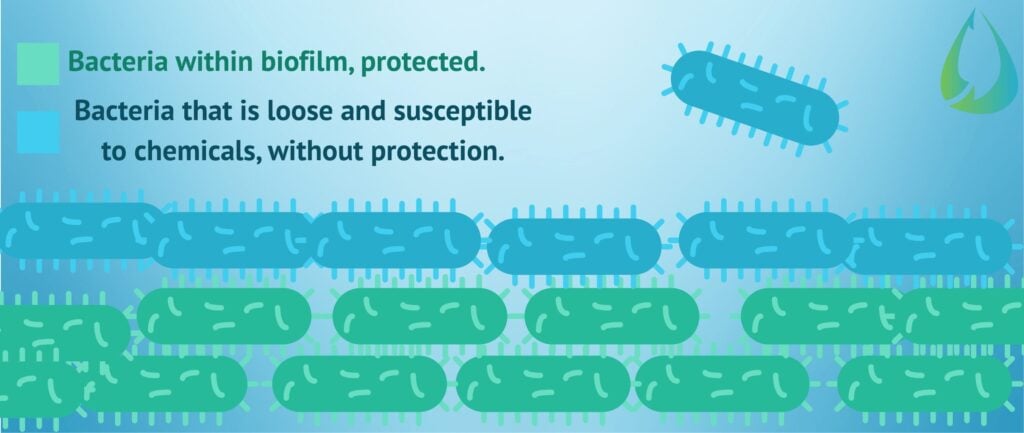
– Can not effectively control the growth of biofilm, which increases MIC (Microbiologically Induced Corrosion).
– Increase corrosion by releasing “free radicals”.
Non-oxidizing biocides interrupt several cell mechanisms and processes, as well as help prevent cell duplication. Common chemical formations for non-oxidizing biocides such as: DBNPA, DTEA, glutaraldehyde, BHAP, bronopol, and isothiazolinones.
+ Inhibits the growth of biofilm successfully.
+ Quite durable.
– Many can be exceptionally toxic.
– More expensive.
Glycol is a common antifreeze material with heat transfer abilities almost as effective as water. Usually, chillers are mixed with a certain percentage of glycol. Although it is not a biocide, glycol is effective at controlling a certain amount of bacterial growth. This is especially true at 25% or above concentration of glycol to water.
Bacteria and corrosion go hand in hand. There is a certain type of corrosion directly caused by bacteria referred to as Microbiologically Induced Corrosion, or MIC. It can also be called Microbiologically Influenced Corrosion. Open systems and recirculating systems are at a higher risk of attracting bacteria than closed-loop systems. The biofilm that bacteria form in this water can form low pH environments. These environments will induce corrosion on the materials that they touch. Additionally, a cathode and an anode can be generated by bacteria that can tunnel through metal. When it comes to corrosion, make sure the biocide you are utilizing is not causing the corrosion and is the correct type for your specific application.
It is recommended to utilize a combination of oxidizing and non-oxidizing biocides in chiller systems. If there is biofilm present, use more non-oxidizing biocides to remove it. Once this is broken, the oxidizing bacteria can help kill the bacteria that were being protected by the film. The amount of chemicals you should utilize depends on your makeup water quality and the specific chemistry of your chiller water system. Factors such as pH, TDS, temperature, etc., should all be considered when picking biocides and the specific dosage amounts.

Yes! Biocides will kill bacteria, which could cause fouling, water quality issues, corrosion, and inefficiency, amongst other problems. Your chiller system will last longer and work better if you implement routine biocide chemical water treatment. To have a Chardon Labs expert assess and implement a chemical water treatment program at your facility, reach out to us with a short contact form.