Alkalinity builder chemicals are used in boiler systems to increase the pH of the water.
There is an optimal level at which to operate a boiler system. If your pH is considered too low, there are some benefits to increasing it to a higher, optimal range. At low pH levels, water is acidic. This is particularly harmful for the metal surfaces of a boiler, which experience high levels of corrosion from acidic water. This phenomenon is referred to as an “acid attack,” usually where pH levels are below 8.5. Corrosion damage, such as surface rust, pitting, and structural damage, can occur. When boiler heat exchangers are corroded, they do not transfer heat efficiently, and it will cost more to heat the same amount.
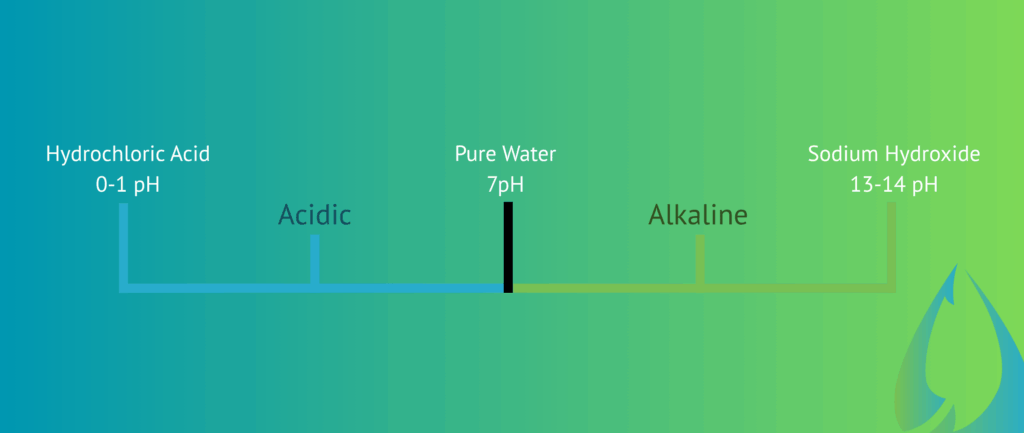
Now that we know why they are important, how do alkalinity builder chemicals (sometimes referred to as pH boosters) function? They increase the levels of alkaline parts in water, such as hydroxide, carbonate, etc. They all work to raise the pH, which lowers the acidity in the water.
It is a popular choice that has the benefit of not producing carbon dioxide (a corrosion-causing acid byproduct that other alkalinity builders may have). It is quick-acting and raises the pH levels quickly once fed into the boiler. Best for low-medium pressure boilers. There is a caustic embrittlement risk at high pressures.
Increases pH at a slower, more controlled pace. It has the downside of producing carbon dioxide as a byproduct. Useful for medium-pressure boilers.
Raises pH at a medium pace. It is mostly used in low-pressure systems due to its carbon dioxide byproducts.
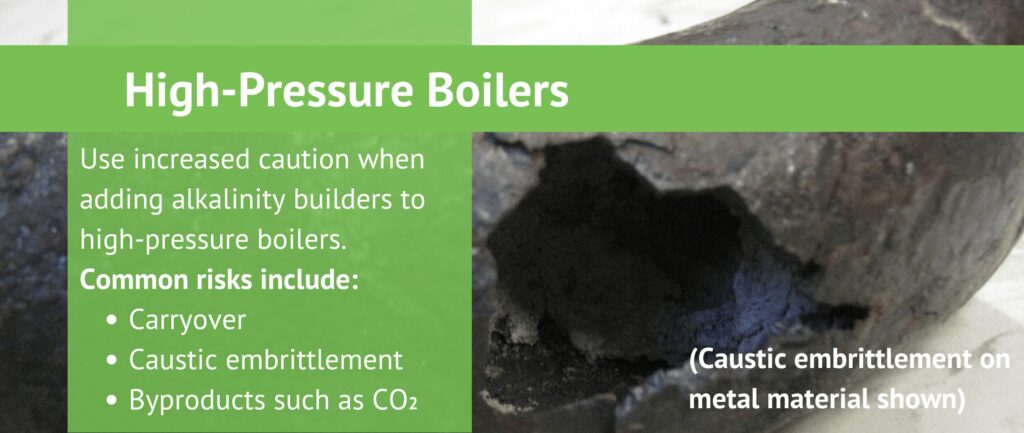
For high-pressure boilers, there are additional risks to consider when it comes to adding alkalinity builders. Then it can cause carryover (the transfer of substances from water into the steam). There is also a caustic embrittlement risk, where hydroxide eats at welded points in the boiler. Caustic embrittlement is a corrosion that cracks metal. Also, the higher the pressure, the higher the risk for large amounts of carbon dioxide byproducts being produced. It is recommended to use small doses of alkalinity builders in high-pressure boilers for this reason. Amine chemicals may be a more desirable option for building alkalinity in high-pressure boilers because they do not leave behind solids. However, amines are more expensive than alkalinity builder chemicals.
However, it is also important not to overfeed alkalinity boilers and have water with too high a pH. There are benefits to lowering pH, such as scale reduction. The recommended approach is to keep your boiler pH within a certain range, usually one set by your boiler manufacturer’s guidelines. 8.5-11 is generally the optimal boiler pH range; however, this can vary depending on your boiler type, so make sure to seek guidance from your manufacturer.
Whether you need to raise your pH with alkalinity builders/amines or lower it with acids, Chardon Labs has you covered. We are a full-service company that can handle all your water treatment needs. We create service reports that are carefully reviewed and analyzed to make sure your boiler is operating within a recommended pH range. If it is not, we are quick to remediate it to prevent issues. If you want to extend the lifespan of your boiler system and maximize its efficiency, reach out to us for a no-cost facility survey. Contact us here.