
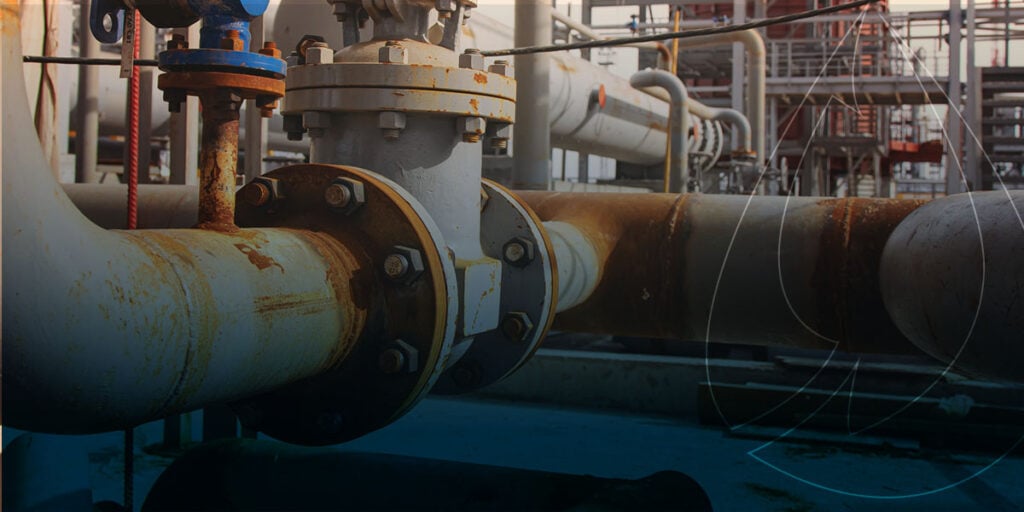
Corrosion and microbial growth in closed loop systems are often overlooked because “closed” sounds like “clean.” Many facilities treat closed loops as set-and-forget assets after startup. In practice, closed loops are not maintenance-free. They are accumulation systems. With little to no blowdown, anything that enters the loop tends to remain there, including dissolved oxygen, nutrients, corrosion products and biological debris.
That is why the core risk is a dual threat. Corrosion in closed loop systems damages metal surfaces, reduces reliability and creates suspended solids. At the same time, microbial growth in water systems can form biofilms, cause odors and create under-deposit conditions that accelerate corrosion. These two problems feed each other through microbiologically influenced corrosion (MIC), creating a cycle that increases maintenance costs and energy use over time.
Closed loop systems recirculate the same water to transfer heat. Examples include hot-water loops, chilled-water loops, process-heating loops and glycol loops used for freeze protection. The key characteristic is limited water turnover. Makeup water additions occur, but there is typically no continuous blowdown to remove dissolved solids and debris. This “no blowdown = accumulation” reality makes closed loops vulnerable to long-term water-quality drift.
Several conditions can drive corrosion in closed loops, especially when oxygen, mixed metallurgy, pH drift and suspended solids remain in the system over time.
Dissolved oxygen is one of the most common triggers for corrosion in closed loop systems. Oxygen enters through makeup water, expansion tanks, vents and maintenance events. Once oxygen is present, pitting corrosion becomes more likely, particularly on steel. With no blowdown, corrosion products remain in circulation, settle in low-flow areas and contribute to under-deposit corrosion.
Mixed metallurgy is a defining challenge in closed loops. Steel, copper, aluminum, brass, stainless steel and some galvanized components can be present in the same circuit. Dissimilar metals create galvanic potentials that can accelerate corrosion of the less noble metal. This is why anti-corrosion for closed loop hydronic systems is not a one-chemical decision. Treatment programs must account for the metallurgy mix, temperature range and flow conditions.
pH drift is common when systems are not tested routinely. Low pH generally increases steel corrosion rates. High pH can lead to copper corrosion under certain conditions. Because closed loops retain what enters them, deviations can persist and shift corrosion behavior across the system.
No blowdown means iron oxide, copper fines and other corrosion products accumulate. These particulates circulate, settle in dead legs and foul heat exchangers. Suspended solids can shield metal surfaces from treatment chemistry, creating localized under-deposit cells that accelerate pitting.
Microbial growth often begins when nutrients, low-flow areas and favorable temperatures allow bacteria to settle and form biofilms within the loop.
Microbial growth in water systems often begins with nutrients introduced during operation. Process leaks can add organics. Glycol can break down and contribute nutrients. New equipment hookups can introduce preservatives, lubricants and construction debris. In some cases, chemical residuals from treatment can also support microbial activity, which is why continuous monitoring is essential.
Dead legs, low-flow branches, lightly used terminal units and seasonal circuits create stagnation zones. Bacteria settle, attach to surfaces and form biofilm. Once biofilm establishes, it can be difficult to remove because it shields microbes from biocides and creates localized chemical conditions at the metal surface.
In closed loops, “no blowdown = accumulation” applies to nutrients as well. When nutrients are introduced, they can concentrate over time. Corrosion products also support microbial activity by providing attachment surfaces, thereby intensifying both fouling and MIC risk.
Warm temperatures, particularly in heating loops, can support bacterial growth. Temperature swings can also influence oxygen behavior and change how rapidly biofilm develops when flow patterns vary.
MIC explains how corrosion and biology become a single operating problem. Microbes form biofilm on metal. Biofilms create localized differential oxygen conditions and trap corrosive byproducts at the metal surface. Those conditions increase pitting risk and drive under-deposit corrosion. As corrosion progresses, roughened metal and corrosion products increase surface area and provide additional attachment sites, supporting more biofilm growth. The result is a reinforcing loop where corrosion in closed loop systems can accelerate alongside microbial growth in water systems.
The cycle often follows a pattern like this, with each stage creating conditions that make the next stage more likely.
When corrosion and microbial growth reinforce each other, the impact can show up in heat-transfer performance, equipment reliability, water quality and maintenance costs.
Biofilm and corrosion products insulate surfaces. Fouled coils and heat exchangers require higher temperature differentials, longer run times, or increased pumping energy to maintain setpoints. Deposits can also increase differential pressure across coils, affecting control stability.
Pitting corrosion can lead to pinhole leaks in piping and coils. Suspended solids can damage pump seals. Deposits can restrict flow and contribute to localized overheating. Mixed metallurgy increases the likelihood that one component type becomes the weak link when oxygen ingress and pH drift are not controlled.
Black water, odors and visible corrosion debris often indicate a system where solids and biological growth are accumulating. These symptoms frequently appear after maintenance events or equipment replacements that introduce oxygen and organics.
Cleaning, filtration changes, chemical adjustments, emergency repairs and downtime all increase costs. Because closed loops often serve critical HVAC and process loads, disruption can affect comfort, production schedules and equipment availability.
Control strategies should address both corrosion and biology. Treatment programs often include oxygen control measures, oxygen scavengers where appropriate, filtration for suspended solids, pH management, regular testing and a closed loop water corrosion inhibitor package designed for mixed metallurgy. Biocide selection often favors non-oxidizing approaches for closed loops, where long-term residual management and material compatibility matter.
For additional guidance and implementation support, read our closed loop chemical water treatment tips.
Corrosion and microbial growth in closed loop systems should be evaluated as an interconnected cycle. No blowdown allows oxygen, nutrients and corrosion products to accumulate. Those conditions support biofilm, and biofilm, in turn, supports MIC-driven corrosion. A program that accounts for mixed metallurgy, oxygen ingress and nutrient sources reduces long-term maintenance burden and supports reliable heat-transfer performance without relying on the misconception that closed equals maintenance-free.
For support evaluating your closed loop water quality, inhibitor program and microbial control strategy, explore Chardon Labs’ closed loop water treatment services.

