
When it comes time to install a new boiler, it is important to maintain it properly from the start. That is why we recommend pretreating and starting a chemical water treatment program right away. This will protect against common boiler issues such as corrosion, scale, and foaming. The feedwater that enters the boiler contains impurities, and it is important to dose chemicals to protect against them. This is applicable whether it is a process boiler or an HVAC boiler. It is especially important in industrial and commercial settings. There are 3 important steps for chemical treatment of a new boiler: Cleaning, boil-out, passivation, and chemical feeding.
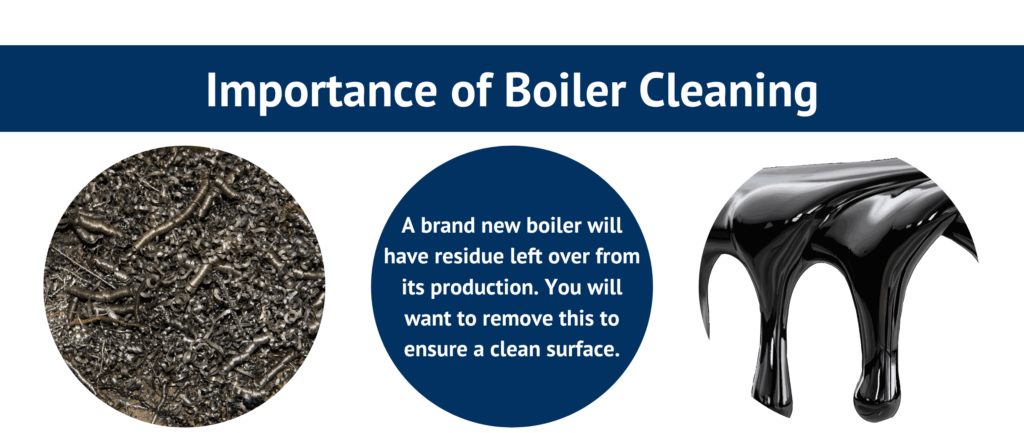
While a new boiler is certainly cleaner than an old one, it still can have debris left over from its assembly. Whether it is metal shavings, grease, or other debris, it is important to clean it. Additionally, many boilers will be installed in an existing heating system. The existing heating system should also be cleaned. If it is an existing heating system that the new boiler is going into, flush the entire heating system, then flush the boiler. Boiler manufacturers often require the heating system be cleaned before installation as to not void warranty.
The flush should be a simple process to remove debris from the system. Immediately after doing this, you will want to start passivation/boil-out.
After flushing the debris loose with fresh makeup water, you will want to further clean the boiler system with alkaline boil-out chemical. This will remove grease/oil that a water flush cannot remove. You can feed boil-out chemical like any other chemical. Boil-out chemical composition can include caustic soda (sodium hydroxide), sodium nitrite, sodium polyphosphate, potassium hydroxide, tetrasodium, and other chemicals. The main purpose is for these to be alkaline so they break up grease via saponification and emulsification, making it soluble in water. Additionally, some blends of boil-out combine passivation chemicals, which we will cover in the next step.
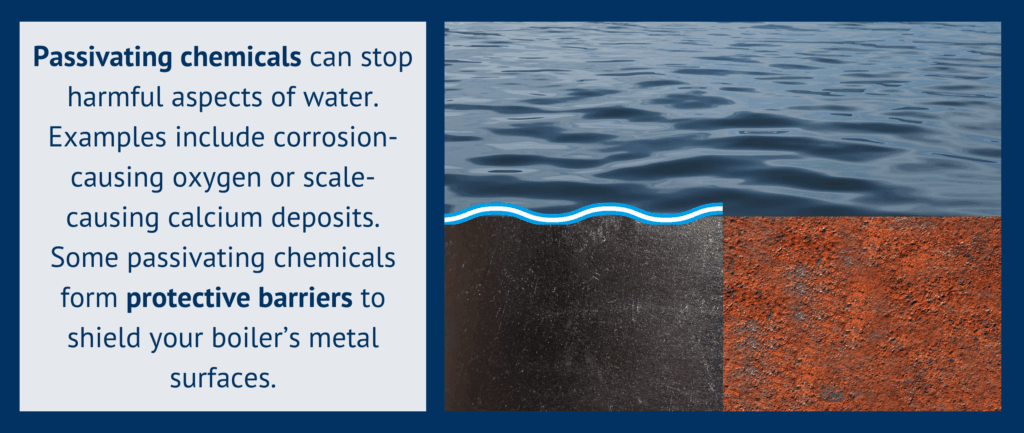
As it is, a new boiler is vulnerable to untreated water. Whether it is aluminum or cast iron, you will want to protect the metal surfaces from the makeup water. There are various chemical formulations, but the kind we want will have unique pretreatment qualities. Such as corrosion and scale inhibitors that form protective film layers. This will make it difficult for scale or corrosion to penetrate the metal layer.
Now that your new boiler has been properly cleaned, boiled-out, and passivated, it is important to keep it in this protected and efficient state for the long haul. To do this, you are going to want to regularly feed corrosion inhibitors, scale inhibitors, alkalinity builders, as well as other chemicals depending on the circumstances. Even though we previously passivated with corrosion and scale inhibitors, there are different types. Some formulas actively remove oxygen or stop scale molecules from crystallizing. We will want to feed both passivating inhibitors and these active, disruptive inhibitors.
In order to effectively maintain a chemical water treatment program for your new boiler system, having the right equipment is necessary.
Regularly, Chardon Labs will work with new construction or facilities replacing their boiler. We can start you on the right path to ensure your boiler system is running efficiently, without waterside maintenance issues, and to lengthen the lifespan of your boiler. If you are interested in hearing about what we have to offer, please contact us.

