
Boiler scale is not just a maintenance issue. In commercial and industrial steam systems, scale buildup is a direct cost driver, manifesting as higher fuel costs, unplanned maintenance and avoidable downtime. For CFOs and plant managers reviewing water treatment budgets, the issue is straightforward — even a thin insulating layer on heat-transfer surfaces forces higher firing rates to produce the same steam output, and the resulting temperature stress can shorten equipment life. This guide explains what boiler scale is, why it forms and the operational and financial impacts that matter most.
Boiler scale is a hard mineral buildup that forms on internal boiler surfaces when dissolved minerals in the water precipitate and stick to heated metal. Over time, repeated precipitation creates layered deposits that reduce heat transfer and disrupt flow. The most common component is calcium carbonate (CaCO3), though deposit chemistry varies by source water, operating conditions and treatment approach.
Other common deposit types include calcium sulfate, magnesium silicate, iron oxide and silica. Scale type matters. Different deposits have different thermal conductivity, adhesion and removal difficulty, so two boilers with similar deposit thicknesses can experience different efficiency losses depending on whether the deposits are mostly calcium carbonate, high-silica or iron-rich scale.
The causes of scale formation in boiler systems typically stem from water chemistry, heat and concentration. Boilers concentrate minerals as steam is generated, and the hottest surfaces become preferred sites for deposition.
Hard minerals, primarily calcium and magnesium, are a leading cause of scale formation in boiler operation. Source water varies by geography and can shift over time. Without adequate pretreatment and control, hardness enters the boiler and becomes more likely to precipitate as cycles of concentration rise.
Heat reduces the solubility of certain minerals. As water contacts hot tube walls and high heat-flux surfaces, minerals can precipitate and adhere directly to metal, forming the first layer of scale.
Steam generation leaves dissolved solids behind. As water is converted to steam, minerals concentrate in the remaining boiler water. Higher concentrations increase the risk of precipitation, especially when blowdown control is not optimized.
Poor pretreatment, insufficient softening and limited chemical control can intensify conditions conducive to scale formation in boiler systems. Program design matters. The right monitoring cadence and boiler water scale inhibitor strategy can reduce the potential for deposition under real-world operating conditions.
The effects of scale in boiler operation compound over time. Early deposits may appear minor, but the cost curve steepens as scale thickens.
Scale acts as an insulator. As heat transfer drops, the boiler must burn more fuel to maintain the load. While the exact penalty depends on deposit type and operating conditions, commonly used industry rule-of-thumb ranges include:
Deposit chemistry can shift these losses. High-silica or iron-rich deposits can be more insulating and harder to remove than “typical” calcium carbonate scale, increasing both fuel penalty and cleaning complexity.
Higher firing rates translate directly into higher fuel bills. For high-load facilities, even a few percentage points of efficiency loss can create meaningful annual cost deltas. Increased firing also raises emissions per unit of steam, which can affect sustainability reporting and compliance planning.
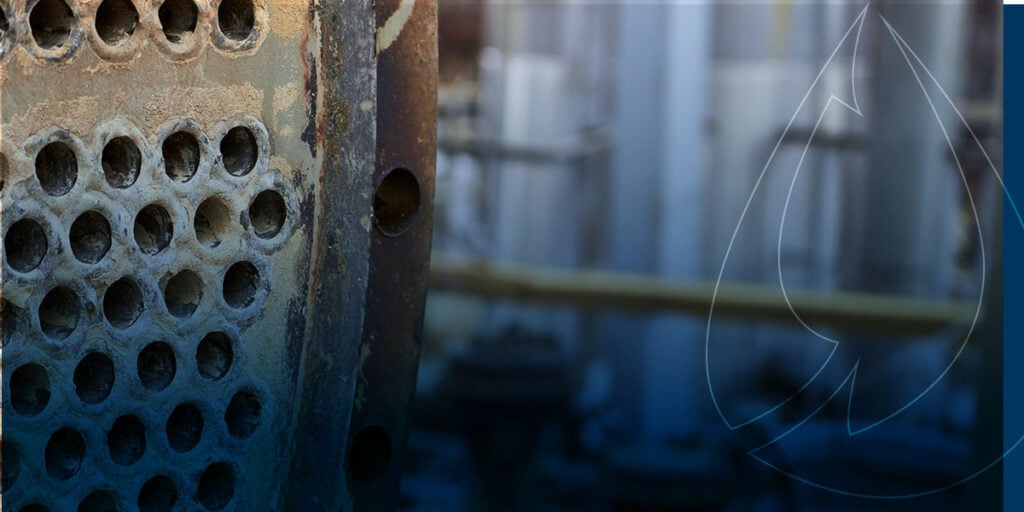
When scale blocks efficient heat transfer, the tube metal temperature increases. That added thermal stress increases the risk of failure, especially at critical points such as tube sheets, where high heat flux and flow conditions can make deposits particularly dangerous. Scale can also slough off, contributing to localized flow restriction and further increasing the likelihood of tube overheating.
Unplanned shutdowns are expensive because costs extend beyond the boiler room. Outages can trigger emergency labor, expedited parts, disrupted schedules and lost production. When redundancy is limited, downtime can force temporary process changes that reduce throughput or increase operating costs elsewhere.
The financial impact typically combines recurring operating expenses with episodic costs. Connecting technical conditions to line-item outcomes helps budget owners evaluate treatment decisions.
Stay tuned for the next blog to calculate your specific costs with our ROI analysis, which expands the math behind fuel losses, downtime risk and payback to calculate true-cost ROI.
Long-term control typically combines feedwater pretreatment, chemical control and testing. Programs often include softening where appropriate, cycles-of-concentration management via blowdown control and routine monitoring to verify targets. Proper use of a boiler water scale inhibitor can reduce the risk of deposition by interfering with precipitation and crystal growth mechanisms, depending on the system chemistry.
When deposits already exist, removing scale from boiler systems depends on the scale type, thickness, access and safety requirements. Options can include mechanical methods, controlled chemical descaling and operational adjustments, selected based on deposit analysis and formation zones, such as tube sheets and other high-heat-flux surfaces.
Scale is costly because it turns heat-transfer resistance into ongoing fuel expense and compounds costs through maintenance burden and reliability risk. With quantified efficiency loss by thickness, an understanding that deposit chemistry changes outcomes and attention to tube sheets as critical failure points, decision-makers can evaluate scale control as an operating investment.
If scale, fuel loss, or boiler reliability issues are affecting your facility, Chardon Labs can help evaluate your system and design a commercial boiler water treatment program built around your operating conditions. Explore our boiler water treatment services to learn how targeted monitoring, testing and treatment can help you protect your equipment and control long-term costs.

