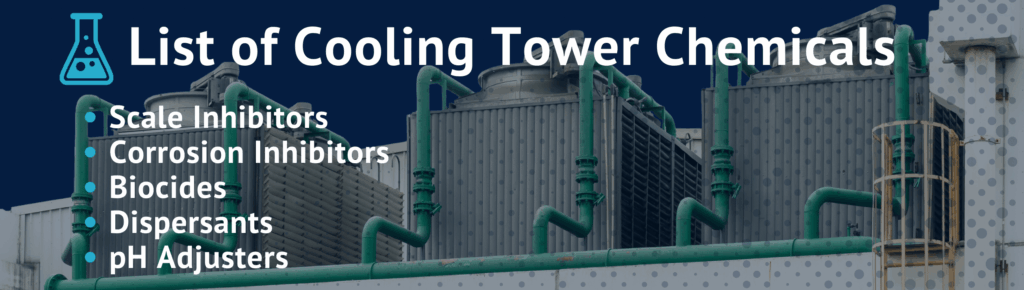
There are several types of cooling tower chemicals required for proper maintenance. They each serve a unique function to combat issues such as corrosion, scale, organic buildup, etc. Additionally, when feeding chemicals, it is important to consider the chemistry of the water, such as its pH, hardness, temperature, and conductivity, as well as the material of the cooling tower. The list below will detail the most important chemicals to feed into your cooling tower.
Scale Inhibitors
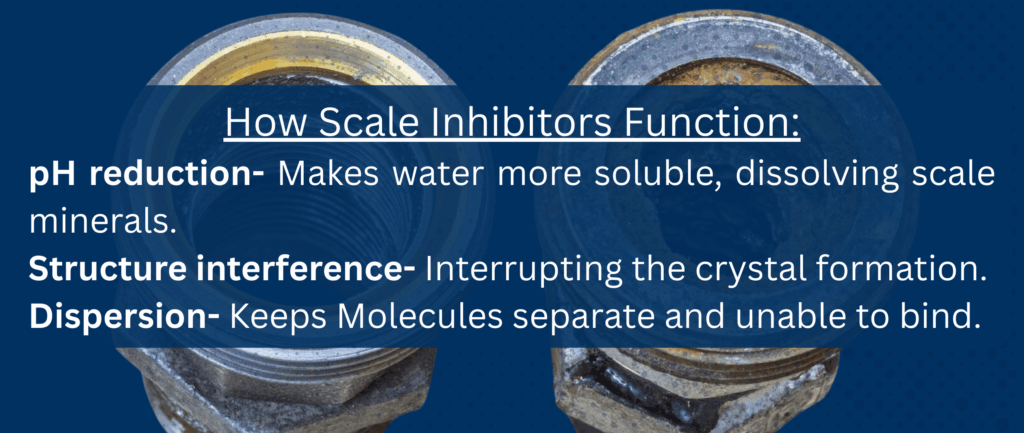
Polyphosphates- These will bind to magnesium and calcium particles; they keep the particles small and spread out in the water. Provides a moderate amount of corrosion inhibition. It is non-organic, and examples include tetrasodium pyrophosphate, sodium tripolyphosphate, and sodium hexametaphosphate.
Phosphonates- Is excellent at both scale and corrosion prevention. These interrupt the crystal building process, affecting both the formation as well as the shape. It also makes it difficult for calcium and magnesium to stick to solid surfaces. Organic, they also provide some corrosion inhibition as well. HEDP, HPA, and PBTC are all examples of phosphonate chemicals used in cooling towers.
Corrosion Inhibitors
(Aforementioned phosphonate) Orthophosphates- It forms a protective film against scale formation on the inner metal surfaces of the cooling tower. They are utilized to control the pH of the water. When they encounter calcium scale particles it softens them and makes it easier for them to flush out of the system. It is inorganic. The following chemicals are all orthophosphates used for cooling towers: monosodium phosphate, phosphoric acid, and disodium phosphate.
Molybdate- Creates a protective film against corrosion. Usually used in conjunction with other chemicals to make it more cost-effective. It has one of the widest pH ranges. It is resistant to other chemicals and temperature fluctuations, making it a reliable and hearty choice.
Amines
Filming amines (polyamine)- Creates a barrier film between the water and metal surfaces. These can include octadecylamine and ethoxylated soya amine.
Neutralizing amines- Modify pH levels to help protect against acidic corrosion. Examples include cyclohexylamine, dimethylaminoethanol, and morpholine.
Biocides
Oxidizing- pulls electrons from bacteria, which either kills the bacteria or prevents reproduction. Considered to be more reactive than non-oxidizing biocides, which can lead to corrosion if not managed properly. This is better at killing aerobic bacteria than non-oxidizing biocides. Oxidizing biocides are the better choice for killing Legionella, although a combination would be the most effective. Chemicals include bromine, chlorine, chlorine dioxide, and ozone.
Non-Oxidizing- Causes cell damage, reproduction prevention, and interruption in regular processes. More effective against anaerobic bacteria than oxidizing biocides. Non-oxidizing biocides are more effective at reducing the amount of biofilm. Popular examples include isothiazolinones, glutaraldehyde, and DBNPA.
Dispersants
Synthetic polymer dispersants- are utilized to keep organic matter suspended so it can be flushed out of the cooling tower. This helps keep the tower clean from unwanted organic matter and prevents layers of organic matter from causing issues. Specific chemicals include polyacrylic acid and polymaleic acid.
pH Adjusters
Acids- Significantly lower pH in cooling tower water, making it more acidic. One of the main functions of utilizing acids is to reduce scale formation. Examples include hydrochloric acid, sulfuric acid, and nitric acid.
Alkalinity Builders- Raise pH significantly. A common benefit of raising pH is to reduce corrosion caused by the cooling tower makeup water. Common chemical choices include sodium hydroxide and sodium carbonate.
Dosage Amounts of Each Cooling Tower Chemical?
Now that you know the most commonly used cooling tower chemicals, how much do you need to feed of each? Each system is different based on the makeup water coming in from your local water source, the type of cooling tower you are operating, and the cooling load. This is why it is important to have a water treatment program that makes sure the right dosage is fed on a regular basis. Along with dosing the correct amount regularly, it is important to monitor and test regularly. Instead of waiting for issues such as corrosion to occur, you can test the water and see what needs to be modified to prevent it. Chemical water treatment pays for itself by saving your expensive equipment from damage or replacement, as well as drastically improving its efficiency.
Chardon Labs Cooling Tower Chemical Treatment Services
Chemicals react with each other in unique ways, so it is important to know what and how much you are feeding into your cooling tower. If you would like to see what your cooling tower system needs for free, get in touch with Chardon Labs. We will provide a free survey detailing any current issues and how to prevent future ones. As a service-based company, our focus is solely on your cooling tower water treatment program. Unlike other companies, we are narrowly focused on providing the highest level of expertise. Additionally, Chardon Labs shows up on time. We made timeliness a priority for all our service technicians.
Reach out here for a free survey or for more information about our services.
Matt Welsh
Matt Welsh is the Vice President and Water Consultant at Chardon Labs. He helps consult a wide range of customers utilizing various methods of water treatment, from chemical to chemical-free approaches, large and small applications, and across a wide range of geographical influences. With 20 years of water treatment experience, including a wide range of troubleshooting and service in potable water and non-potable HVAC and industrial applications, he is an expert in water treatment chemistry for cooling towers, boilers, and closed-loop systems.