
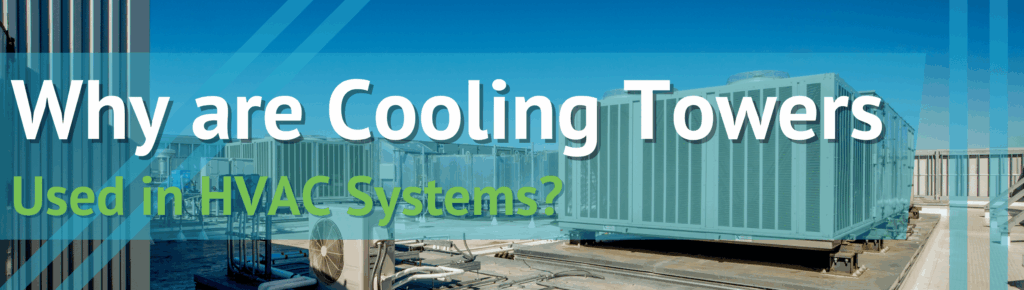
Cooling towers are part of some HVAC systems, but not part of others. Why is this? Large facilities that need a lot of cooling will opt for a cooling tower. This is because it provides bulk cooling cheaper and more efficiently than a condenser can by itself. Alternatively, if the facility is small and only needs a moderate amount of cooling, the costs and efficiency gains will not be worth it. The cooling load your facility requires will determine what works best in your system, and this article will help you make your decision.
Here are some important factors to consider when choosing whether to include a cooling tower in your building’s HVAC system:
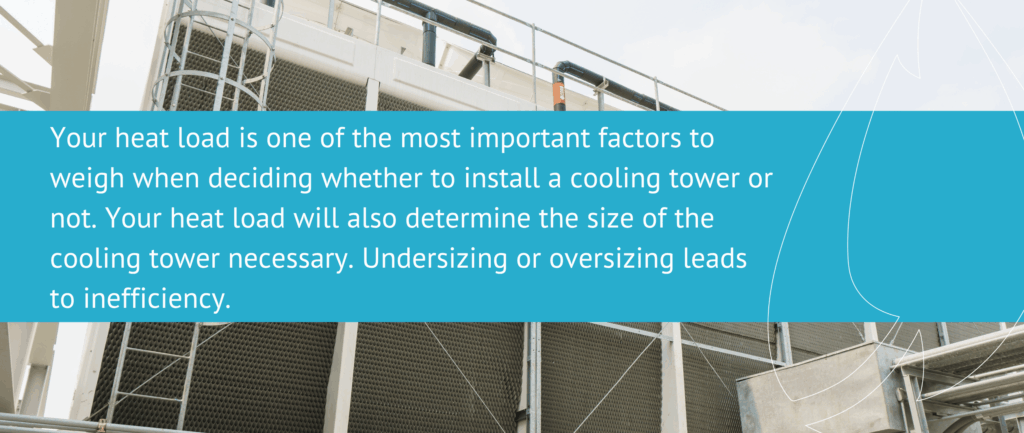
HVAC systems have widespread usage; they can be used in areas such as residential homes, factories, hospitals, and schools. Design engineers, architects, and contractors will focus on energy efficiency for cooling buildings. Commercial HVAC systems are expensive and have big areas to cover; cooling towers are often the solution to effective, cheap cooling.
Overworked HVAC systems can break down, have high energy costs, and have a shorter lifespan. Cooling towers can take on heavier loads and alleviate unnecessary stress on existing HVAC parts.
To understand why cooling towers are useful machinery to effectively cool large areas, it can be helpful to understand the inner workings of it.
Chillers are usually utilized with cooling towers. A chiller will absorb heat from the facility and send the heated water to the cooling tower to remove the heat.
Cooling towers utilize evaporative cooling. After receiving the warm water, the water then comes in contact with air. The water will then evaporate and leave behind cooler water. This water is then sent to the chiller.
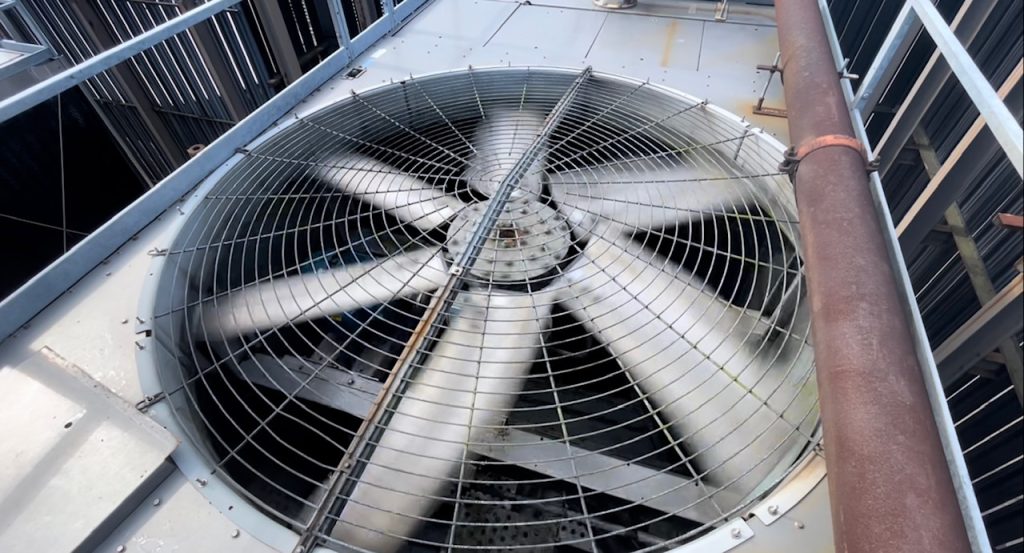
Large fans spin inside towers to direct airflow between outside air, the inside of the tower, and the building or equipment the cool air is directed.
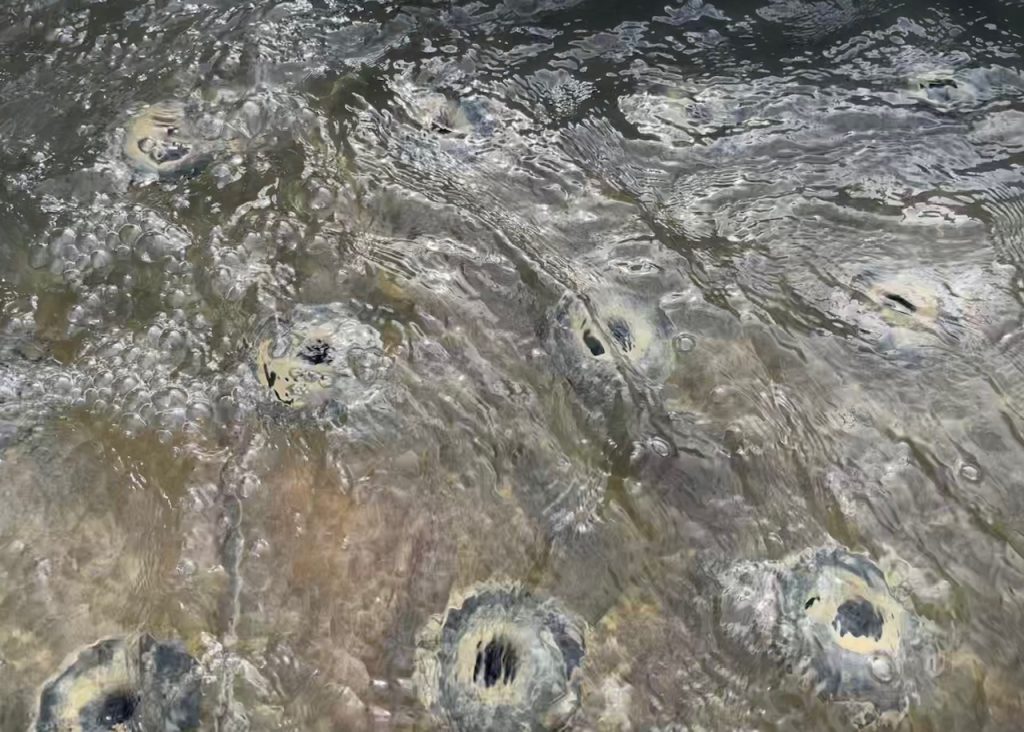
The surface area inside the tower is important and it is why there is splash or film fill to create surfaces for evaporation to occur.
Water continually flows throughout the system during this. Water has to be introduced or recycled within the cooling tower. While water is necessary for the cooling attributes, it carries contaminants that, if not treated properly, cause rusting and can impair surrounding air quality. Chemical water treatment solves the issues with water and keeps the system running at peak performance.

Chardon Labs services cooling towers for a range of customers. Whether your facility is big or small, industrial or residential, we have got you covered. Our cooling tower chemical water treatment programs are specifically designed for the type and size of the equipment you have. To learn how we can help your treat your cooling tower reach out today!