There are two main causes of “black water” occurring in a closed loop heating or cooling system:
Black magnetic iron oxide (magnetite). It is formed in mud-like deposits and can often collect around narrow pipes, coils, and heat exchangers. This is a form of corrosion and is usually seen in closed loop systems without any sort of water treatment.
Mill scale is coming off the pipe. When pipes are manufactured, they are often coated with an iron oxide referred to as “mill scale.” Over time, metal leaching can occur when the mill scale enters the water. Because industrial closed loops are rarely flushed, higher concentrations of the substance can form.
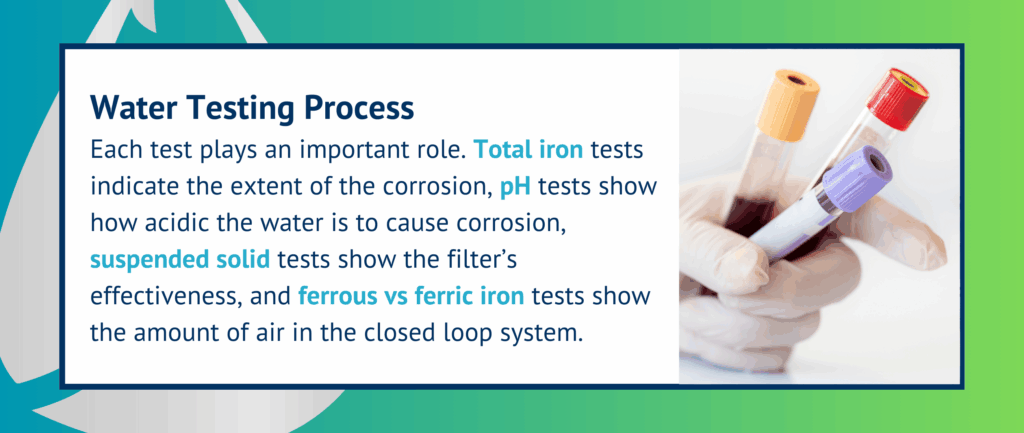
Testing Closed Loop Water
Total iron test- This will measure how much iron is in the closed loop’s water; levels above 1ppm indicate some level of corrosion, with levels above 5ppm indicating significant corrosion.
pH test- The optimal pH range for a closed loop system is 8 to 10. If it is below this, it means the water is acidic and is actively causing corrosion.
Total suspended solids test- This will measure the amount of solid metal materials floating in the water. Higher levels indicate both a need for filtration and treatment of the underlying corrosion issue.
Ferrous vs ferric iron test- Ferrous iron is from magnetite, found in closed loops with low oxygen levels. While ferric iron is “red rust” and is associated with high oxygen levels, causing the corrosion.
The Fix for Black Water in Closed Loops
Chemical Feeding
Corrosion inhibitor chemicals are essential to combat magnetite/mill scale corrosion. pH adjuster chemicals such as alkalinity builders or acids can help you reach a desired pH range. This needs to be fed on a regular basis, ideally as part of a chemical water treatment program. Often, black, sludgy water can void the warranty on heating and cooling equipment connected to the closed loops.
Bag Filter
A bag filter or another type of strainer should be in place to catch large debris as it accumulates. A common type of filter is a bag filter. Bag filters are typically made of polyester felt or nylon mesh and are rated to filter down to a certain number of microns. They allow water and chemicals to pass through, while removing suspended solids (such as the ones that cause black water).
Water Color Diagnoses Specific Issues in Closed Loops
Red- Closed loops, generally, have less corrosion and suspended solids than open loops (which will often have reddish water caused by corrosion). However, they still need treatment, just not as much as open loops.
White or Cream- Scale will form white or cream deposits within your closed loop system. It is usually white or cream in color. Scale deposits become more prevalent based on how hard the water in the system is.
Multicolor- Biofilm, caused by large amounts of bacteria, will often range in colors. It could be brown/red/orange from a sulfate reducing or iron bacteria. It could also be black, mixed with magnetite corrosion, or from anaerobic bacteria.
Chardon Labs Closed Loop Water Treatment Program Specialists
Chardon Labs is a service-based company, aimed at preventive maintenance and problem remediation through chemistry. Our chemical process involves testing several important quality indicators, setting up the right equipment to feed chemical and filter systems, and actively adjusting our program to extend the lifespan of your equipment, as well as increasing its efficiency. To have an expert assist your closed loop heating or cooling system, book an in-person or online consultation.
Matt Welsh
Matt Welsh is the Vice President and Water Consultant at Chardon Labs. He helps consult a wide range of customers utilizing various methods of water treatment, from chemical to chemical-free approaches, large and small applications, and across a wide range of geographical influences. With 20 years of water treatment experience, including a wide range of troubleshooting and service in potable water and non-potable HVAC and industrial applications, he is an expert in water treatment chemistry for cooling towers, boilers, and closed-loop systems.