
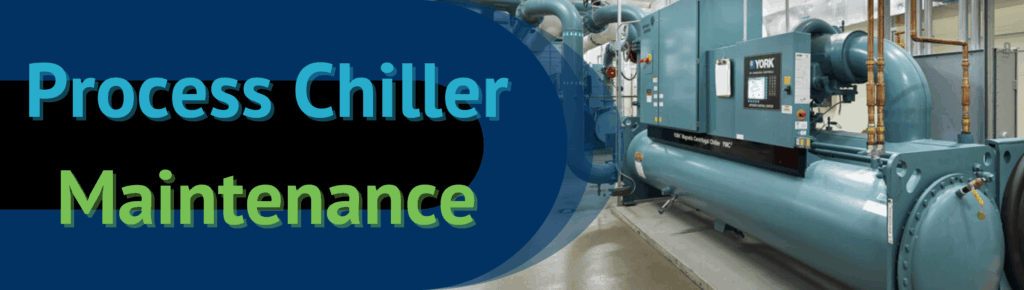
Process chillers are vital cooling systems for many industrial and commercial applications. They are expensive to install and operate, especially if they are not running efficiently. Therefore, it makes sense to protect your investment, prevent downtime, and keep up with regular maintenance. These maintenance procedures are for a water-cooled process chiller; an air-cooled chiller will have different maintenance requirements.
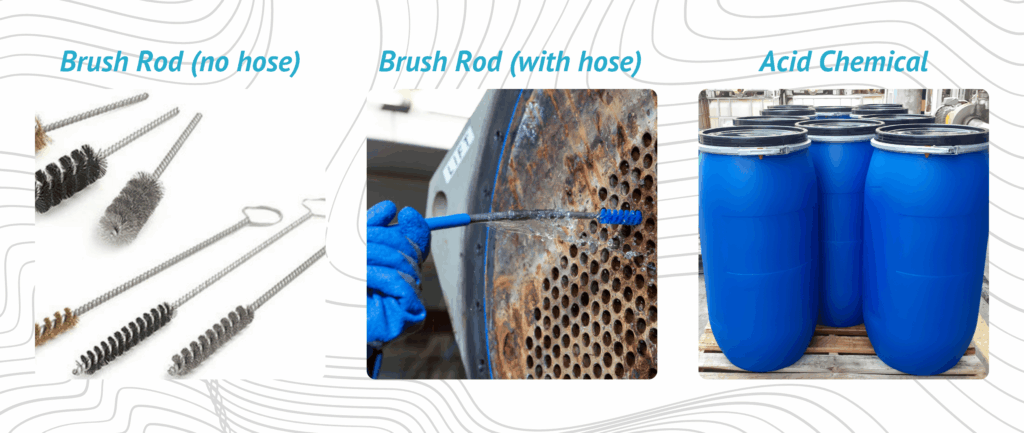
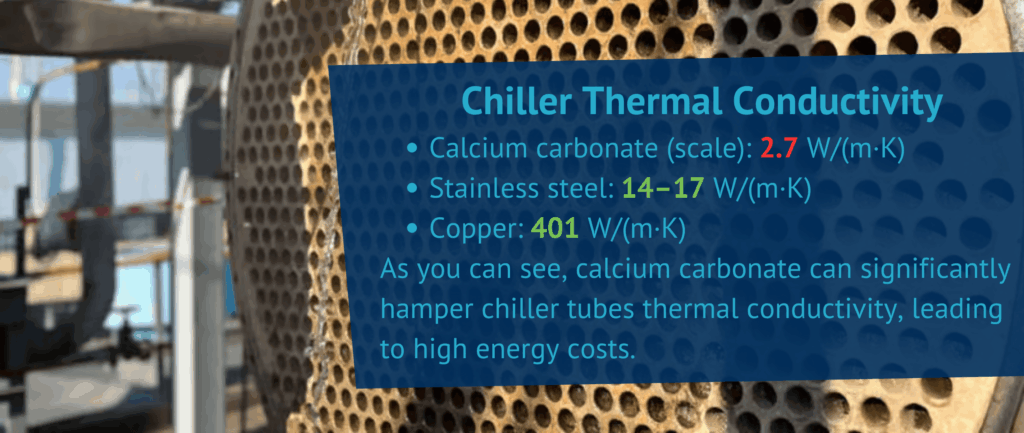
There are two main ways to clean process chiller tubes. Fouling and scale will build up over time on chiller tube surfaces. It is essential to clean your tubes, as it significantly enhances heat transfer. If there is any sort of debris or fouling on the tubes’ service, heat will not transfer efficiently as it would with clean metal surfaces, resulting in more energy wasted to cool the same amount.
Brush cleaning- This is the fastest and most common way to clean process chiller tubes. It can involve a brush and a metal rod or a brush and a hose. The brush and hose combination is much more effective. Friction from the brush and water pressure from the hose work in tandem to effectively remove fouling and other debris stuck in the heat exchanger. Goodway is the most popular brand for chiller tube hose cleaners. There are several brush manufacturers; the most common brush material is nylon. This effectively removes fouling but may have trouble with hardened scale. Ideally, the scale would be chemically softened to be able to effectively remove it.
Acid Wash- A more time-consuming approach that can yield even cleaner results is acid cleaning. It could cause downtime; therefore, it is best to do it when its downtime would have the least impact (such as starting it before use if it is a seasonal application). To perform an acid wash, you feed a significant amount of acid into your system. This will then dissolve scale and other solids stuck on your chiller tube surfaces. After acid washing, it is important to flush the system to remove suspended solids and acid chemicals. After around 15 minutes of clean water running through the system, it is important to restore the pH in the water by adding alkalinity builder chemicals. This counteracts the corrosive nature of acid.
A well-executed chemical water treatment program will result in less effort needing to be spent on other types of maintenance, such as cleaning, repair, and replacement. The makeup water that comes from municipal sources is not ideal to have in your system unless it is chemically treated. The chemical treatments available for your condenser water will reduce scale, corrosion, and bacteria/fouling. In addition to this, chemical treatment will extend the lifetime of your process chiller and improve its efficiency. Automatically fed pumps and remote monitoring can be set up to effectively run a chemical water treatment program. There are 4 main types of chemicals needed for process chiller maintenance:
Refrigerant leaks can become costly and pose a safety hazard. In addition to monitoring refrigerant levels used, there are two major ways to detect a refrigerant leak:
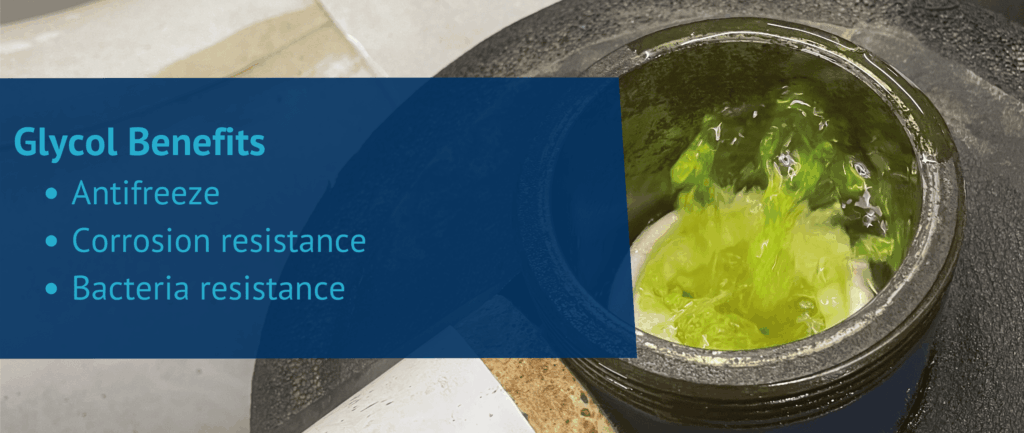
Glycol is an essential antifreeze protection for your chiller process system. If it were to reach freezing temperatures for too long, your chiller would burst, leading to significant repair costs. Measuring the level of glycol present in your system is important; in addition to antifreeze protection, glycol provides some level of corrosion inhibition and bacteria mitigation.
It is important to check the pressure of your oil, measure the level of oil used and, in your system, and monitor leaks. Additionally, you will need to perform regular compressor oil filter changes, typically on an annual basis.
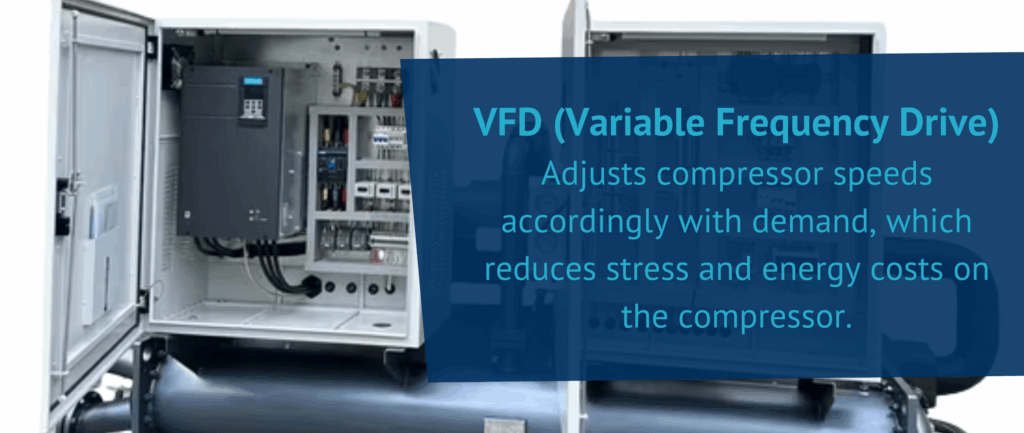
It manages actuaction states of electric pump motors. It significantly impoves efficiency, electric usage can optimistically go down on the system by 30-50%. An additional benefit of it is that it allows for soft starting the motor and pump.
Maintaining the ideal water chemistry for your process chiller can be a challenge. There are tens of water quality indicators that can be optimized with the right chemical treatment and equipment. Water treatment pays for itself, offering significant efficiency savings and preventing costly, large repairs and replacements. To learn more about our water treatment services, reach out here.