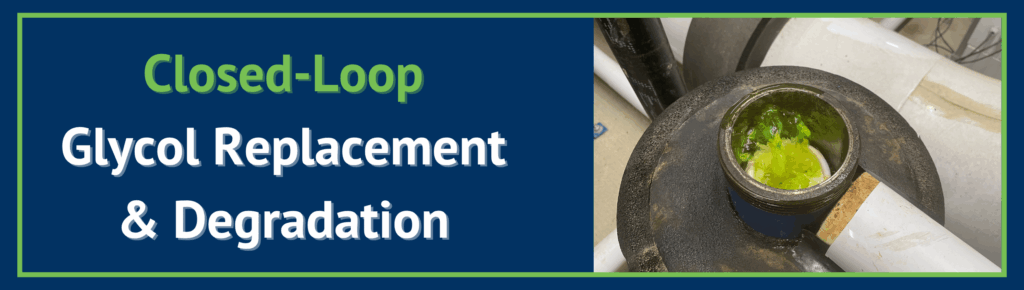
Both ethylene and propylene glycol will degrade given enough time in a closed-loop water system. Before this happens, it is important to flush and replace it with new glycol.
The primary way glycol will degrade is by it interacting with oxygen present in the water. The risk of this also increases when temperatures rise, which is why boilers are especially at risk. When glycol degrades, it creates acidic byproducts which can skew your pH balance and cause corrosion. Sludge formation can also occur because of glycol byproducts.
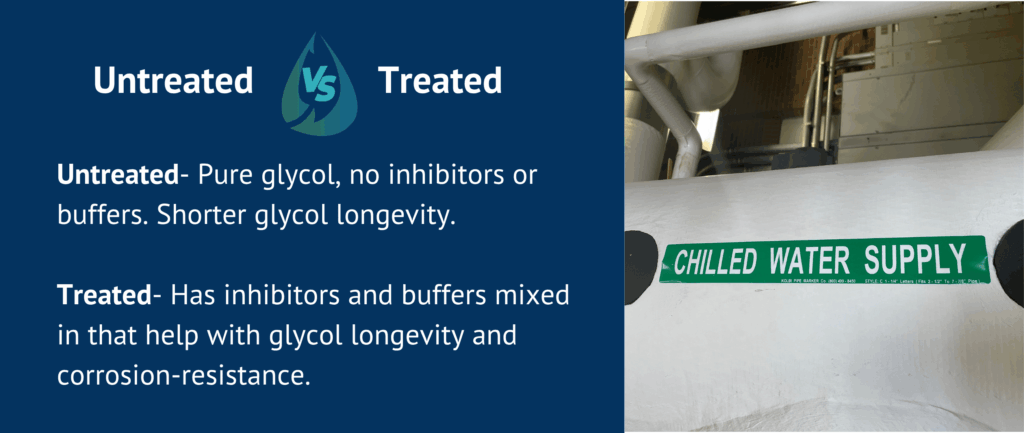
Untreated/uninhibited glycol means that no inhibitors or buffers are mixed in with the glycol solution. This type of glycol chemical has nothing mixed in (other than water).
Treated/inhibited glycol refers to glycol that has inhibitors or buffers. This is separate from molybdate/nitrite and other chemicals used in the chemical treatment of closed-loop systems. The purpose of the inhibitors is to both prevent corrosion and extend the life of the glycol solution.
Due to this, it is recommended to use treated/inhibited glycol. It reduces the risk of corrosion, degradation, and associated maintenance/efficiency costs.
Treated/inhibited glycol, where the chemistry and system are maintained properly, can last for over 20 years. Conversely, untreated/uninhibited glycol may only last 2 to 3 years. These numbers can vary substantially depending on water quality and other factors.
Regular testing of your closed-loop water systems’ glycol concentration and water chemistry will help you monitor degradation. Based on this and your annual layups, flushing and replacing glycol will help prevent degradation as well.
Test the glycol concentration, iron, and pH in your process water. This will help determine the concentration of glycol and common issues associated with glycol degradation, such as corrosion (iron levels) and acidity (pH levels). By monitoring changes at least on an annual basis, you will be able to determine when you need to replace the glycol in your system.
Chardon Labs provides closed-loop water treatment services. This includes testing the water chemistry regularly, feeding of chemicals like glycol, flushing, and problem prevention. To learn more fill out a quick contact form!