As closed loop systems work quietly behind the scenes, it’s easy to overlook them until something goes wrong. That “out of sight, out of mind” assumption creates a dangerous vulnerability. Issues like corrosion and biological growth silently degrade the inner workings of these systems, which require significant capital investment. When unmanaged systems fail, you face emergency shutdowns and expensive repairs.
This guide to closed loop chilled water system treatment will help you understand the common failure points. We’ll also provide an actionable framework to help protect your assets, improve efficiency, and mitigate operational disruptions and downtime.
Schedule Closed-Loop Maintenance
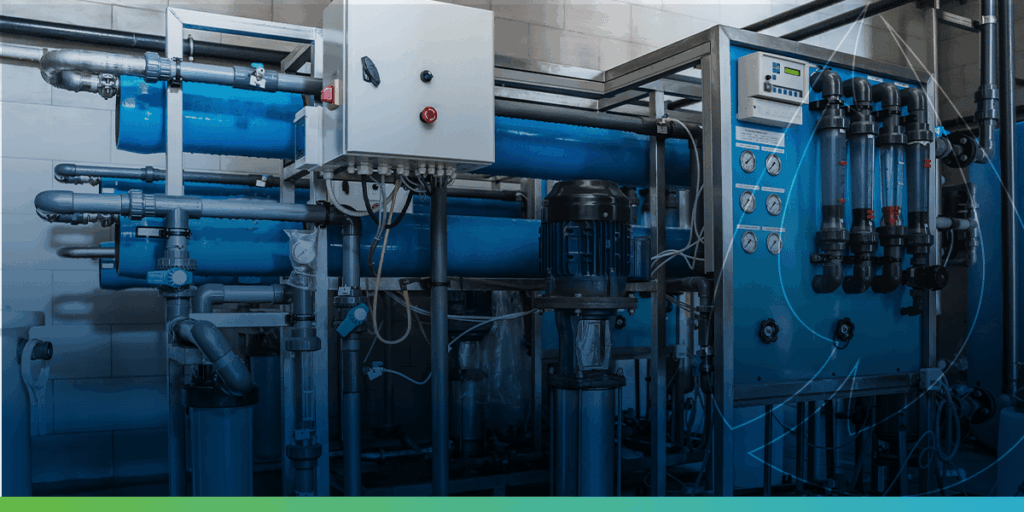
A closed water system is a sealed heating or cooling loop of continuously circulating water. The water flows through pipes, heat exchangers, chillers and boilers without any regular exposure to the atmosphere. Unlike open systems that evaporate water and require constant makeup, closed loops retain their original water charge for months or years.
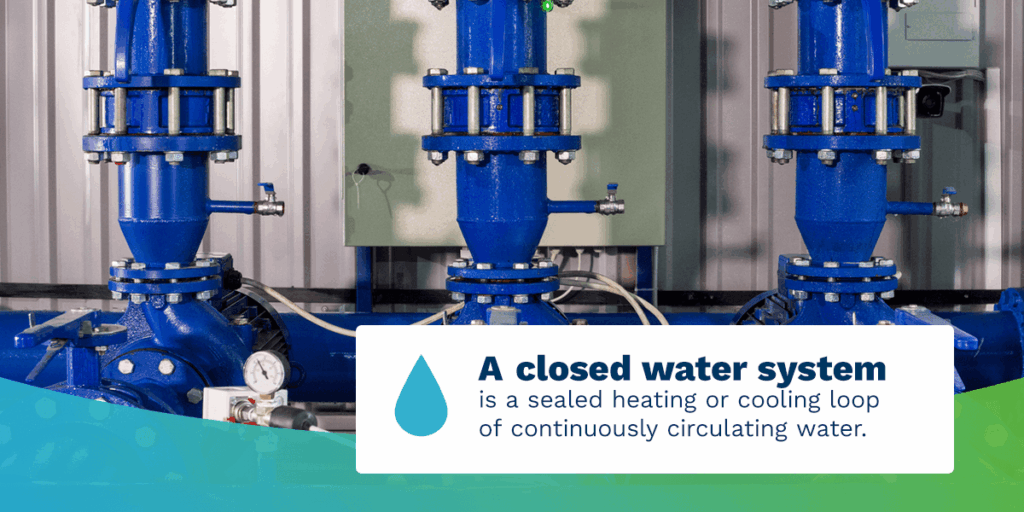
A closed water system includes key components like:
The water flows through the system and absorbs heat from one area and releases it in another. It’s an efficient way to control temperature for HVAC systems or industrial processes.
Because there is no atmospheric contamination, the closed system experiences less mineral buildup than open systems. However, the sealed environment can collect corrosive gases, dissolved oxygen introduced during initial fill or leaks, and any contaminants present in the makeup water. Without proper treatment, this closed environment can intensify the buildup over time.
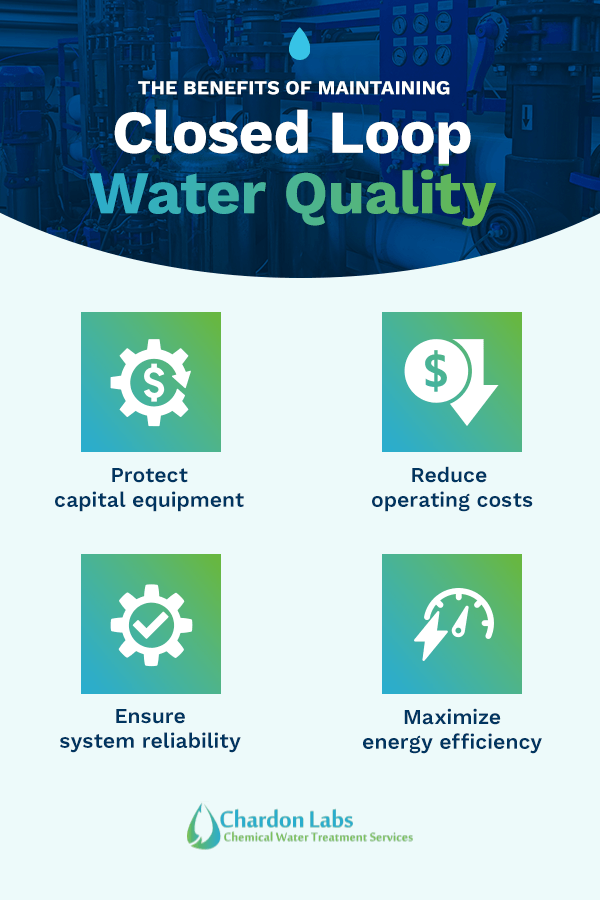
The water quality within a closed loop system has a major impact on performance, longevity and your operating budget. So, when you maintain proper cleanliness and chemistry, you can protect your assets. That’s why proactive water treatment is a strategic investment rather than a maintenance expense.
Here are additional benefits of maintaining your closed loop water quality:
Understanding common problems will help you recognize the warning signs. You can take corrective action before minor issues become major ones, such as equipment damage.
Most of these problems develop silently and often remain undetected, but you can be well-prepared by understanding them better:
You first need a systematic approach to address any current contamination. This three-phase process applies whether you’re commissioning new equipment or rehabilitating an existing system.
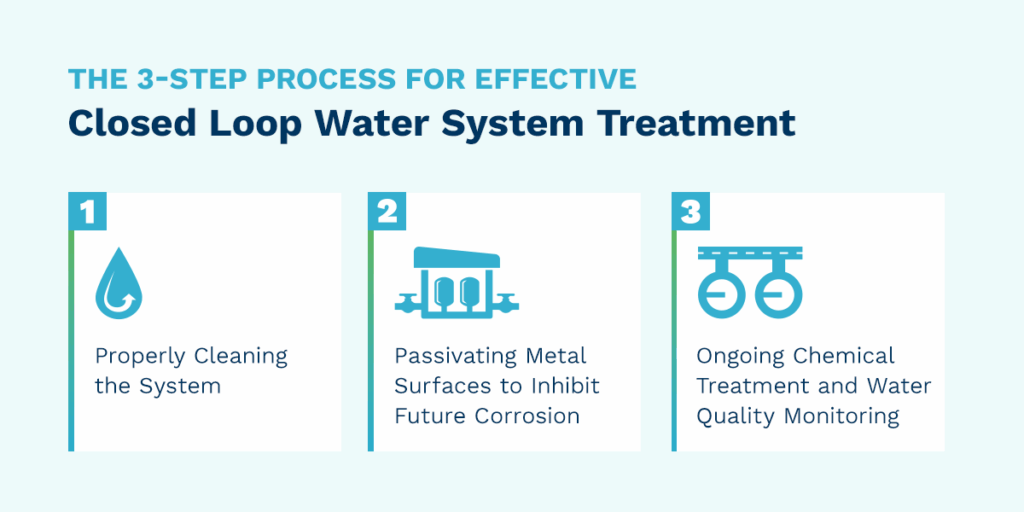
Cleaning is the essential foundation for an effective long-term water treatment. New systems contain mill scale, welding slag, pipe dope and metal shavings from installation. You must remove these contaminants before the equipment starts, as they interfere with heat transfer and may create sites for localized corrosion.
Existing systems that have operated without treatment often accumulate thick deposits of iron oxide, sludge and biological growth. All of these can block treatment chemicals from reaching the metal surfaces. Cleaning a closed loop chilled water system requires you to circulate specialized chemical cleaners formulated to dissolve these specific deposits without damaging system components. The process includes a complete system flush to remove loosened debris so it doesn’t settle in heat exchangers or control valves.
A professional cleaning and flushing ensures your system starts with clean metal surfaces ready for passivation and ongoing protection.
Passivation creates a protective barrier that shields metal from corrosive attacks. This chemical process forms a passive layer on steel and copper surfaces that blocks oxygen and other corrosive agents from reaching the base metal. Closed loop corrosion inhibitor formulations typically include nitrites, which react with steel to form a protective iron oxide film and molybdates. These provide additional corrosion resistance across a range of pH conditions. The passivation layer stops corrosion before it starts.
Proper passivation takes time. You need to maintain inhibitor concentration within specified ranges and allow the protective film to develop across all wetted surfaces in the system. The passivation process typically takes several weeks of circulation under proper chemical conditions.
Treatment is not a one-time event. You need a continuous program that maintains the protective conditions. Your system requires sustained corrosion inhibitor levels to maintain the passive film on metal surfaces. Some systems also need biocides to manage bacterial populations that can breach chemical protection through MIC.
However, an effective treatment depends on regular testing and adjustments. Professional chemical water treatment tips stress regular monitoring of key parameters. The goal is to keep chemistry within target ranges that protect your specific system metallurgy and operating conditions.
Chemical treatment effectiveness depends on maintaining correct dosages and water chemistry parameters. Infrequent testing creates gaps in oversight where corrosive conditions can develop undetected. A quarterly dip-and-read approach might miss pH fluctuations, inhibitor depletion or bacterial growth that occurs between test intervals, allowing damage to progress for weeks or months before detection. By the time annual testing identifies a problem, significant corrosion may have already occurred.
The advantages of on-site monitoring for industrial water system maintenance include:
Chardon Laboratories delivers comprehensive closed loop water treatment services built on decades of experience managing industrial and commercial water systems.
Our ISO 9000-certified technicians follow stringent processes to ensure consistent results across every site visit. Our technical expertise and certifications have enabled us to build this quality management system on continuous improvement, standardized procedures and accountability.
When you partner with Chardon Labs, you receive service from trained professionals. We understand water chemistry, system metallurgy and the specific treatment protocols that protect your equipment. Our technicians arrive in fully stocked service vehicles with the testing equipment and chemicals needed to maintain your system.
Chardon Labs sells clean systems, not chemicals. Unlike suppliers who profit when you use more product, our fixed-price model aligns our interests with yours. We benefit when your system operates efficiently with minimal chemical consumption and no equipment failures.
With us, you get predictable annual costs. There’s no uncertainty of fluctuating chemical bills tied to water usage. You know your water treatment expense at the start of each year, simplifying budget planning.
Every service visit generates a detailed electronic report that outlines your water quality parameters, chemical adjustments and system observations. These reports are available the same day and stored in electronic archives for your convenient access.
You gain a clear audit trail, which is important for compliance purposes. Our electronic reporting simplifies documentation requirements and provides transparency into your water treatment program performance. Historical data helps identify trends and optimize treatment protocols over time.
Questions are sure to arise when working on closed loop water treatment. Here are answers to a few common queries.
Typical water quality parameters for closed loop systems include pH levels between 8 and 10, as well as total iron levels below 1 parts per million (ppm). That said, the target ranges vary based on your system metallurgy and inhibitor chemistry.
Your treatment provider should establish specific targets. They generally base the targets on your system design, operating temperature and the corrosion inhibitor program in use. With regular testing, you can verify that the chemistry stays within these ranges.
The specific chemistry depends on system metallurgy, water quality and operating conditions. However, treatment programs typically combine corrosion inhibitors with pH adjusters to maintain alkaline conditions and help reduce corrosion rates.
Systems with biological growth may require nonoxidizing biocides that control bacteria without damaging system materials. Glycol-based systems use inhibitor packages formulated to be compatible with antifreeze solutions, as standard inhibitors may not perform effectively in glycol environments.
Monthly testing provides adequate oversight for most systems, though quarterly intervals may suffice. New systems and those with a history of problems benefit from more frequent monitoring, sometimes weekly or biweekly. Tests should be performed until water quality stabilizes within target ranges and shows consistent performance over multiple test cycles. Systems in critical applications or those operating under demanding conditions may need more frequent testing.
Your service provider can recommend an optimal testing frequency based on your specific system and operating history.
Take action to protect your equipment and budget. Chardon Labs offers professional system assessments that identify current water quality conditions and evaluate corrosion risk. We also provide clear recommendations tailored to your facility. Our ISO 9000-certified technicians bring decades of experience in closed loop water treatment.
Schedule an assessment with us and experience firsthand how proactive water management protects your investment.