
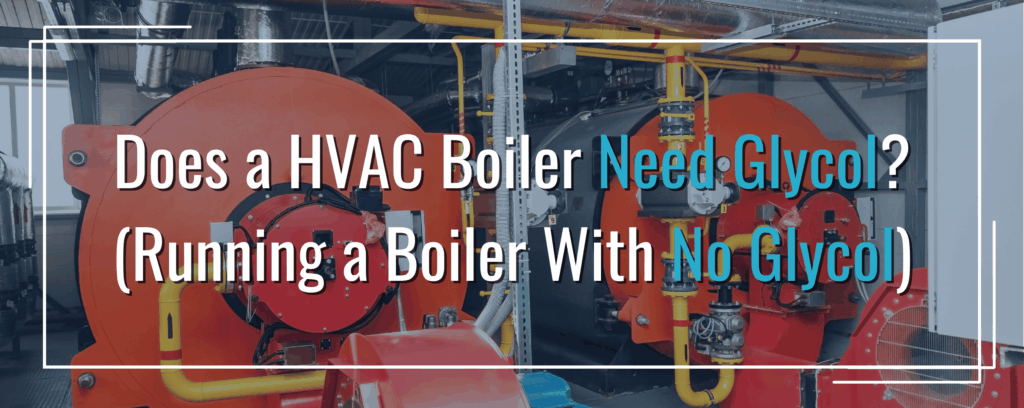
A boiler can run without glycol; it will heat water and function normally. In fact, water is more efficient at heat transfer than glycol. So why even feed glycol in a boiler system? A boiler heats to temperatures significantly above freezing; however, there is still some risk that it could freeze. If the boiler is shut off, freezing temperatures come at an unexpected time, the gas supply gets cut off, or if any part of the boiler is in an outdoor or uninsulated area, there is risk for freezing. Now, if there is glycol mixed in with water, your boiler pipes could face temperatures lower than -54°F and still not freeze.
Many small apartments, residences, offices, and churches have boiler systems as part of their HVAC systems. Some of them choose not to use glycol in their boilers. If there is a low chance of the boiler ever freezing, glycol is not necessary. Additional benefits of not using glycol in a boiler for these types of buildings are saving on maintenance labor, water being a more efficient heat transfer conduit, and lower maintenance risks.
In smaller operations, some facility owners/maintenance managers may choose not to chemically treat their boiler as well. While HVAC boilers are closed-loop and the boiler demand for small buildings is small, chemical treatment will still prolong the life of your boiler.
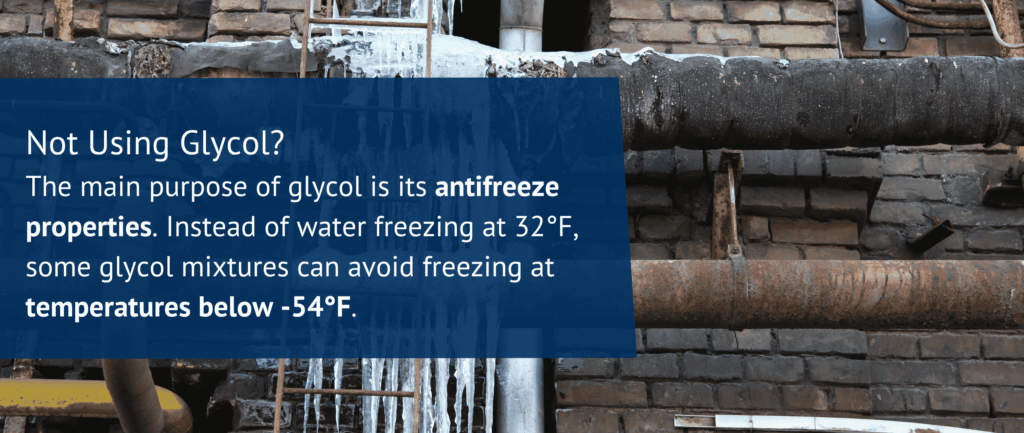
Boiler loops are at high-risk in outside areas, especially in colder environments. Loops filled with only water are significantly more vulnerable. Glycol can especially help if your loops are located in any of the following areas:
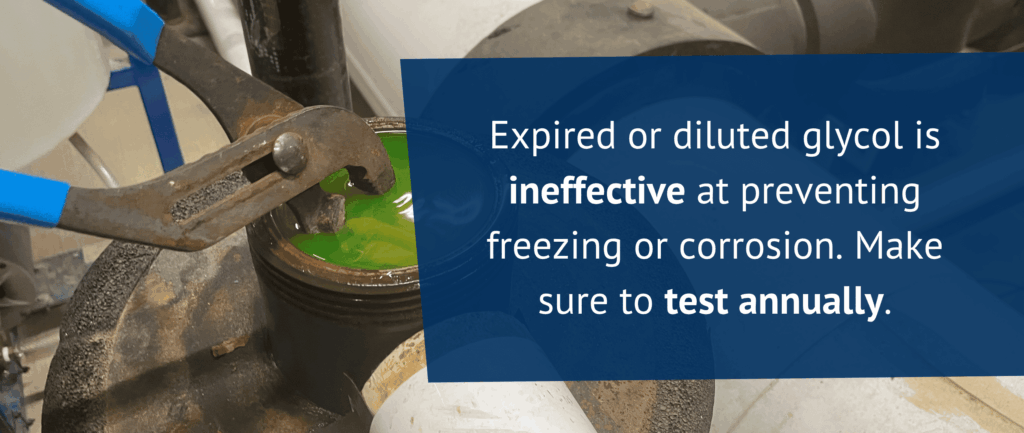
Glycol is an effective antifreeze agent that can protect your HVAC boiler at temperatures below freezing. However, this is only the case if the glycol is not “expired”. You need to test the glycol concentration, iron, and pH annually to ensure it has not degraded. Degraded glycol will provide reduced or no protection against freezing. There are also cases where the glycol may have been diluted over time. For example, if you open the makeup valve and feed in new water without adding a proportional amount of glycol. It is not just freezing that you need to worry about. Treated glycol with corrosion protection will turn into corrosive glycol that will cause rust and pitting in your expensive boiler system.
Chardon Labs can test, feed, and monitor glycol and other chemicals in your boiler system. We can supply and operate the correct equipment to effectively chemically treat it. Protect your investment and remove headaches by reaching out to an expert at Chardon Labs here.